Monday, April 4, 2011

1185 Park Avenue by Anne Roiphe 1999

"[B]y focusing more on the other characters -- on what they do and say -- than on her own thoughts and feelings, Roiphe gives her memoir the dramatic vividness of a novel." from a review in the New York Times by Karen Lehrman, June 6, 1999

Anne Roiphe’s mother, Blanche, inherited wealth. Blanche’s grandfather, Moses Phillips, a Polish immigrant, and his son Isaac, her father, had started out peddling shirts. Before long they were making the shirts they sold. The Phillips-Van Heusen Company was established through their efforts and eventually provided both careers and income to family members.

Blanche Phillips married Eugene Frederick Roth in 1931 and they moved into an apartment at 1185 Park Avenue on the East Side of New York City when they returned from their honeymoon. It was one of the few Park Avenue buildings to accept Jews, and Blanche’s brother and his family lived in the same building. Her two sisters and their families lived in two other hospitable buildings elsewhere on Park Avenue. Blanche’s husband was a lawyer who was quickly absorbed into the family business. The author was born in 1935; her brother in 1939.

This memoir is an engrossing but sad story of a wealthy Jewish family grappling with their newly acquired wealth and status. When Roiphe became old enough to make sense of arguments and behavior, she realized that her father married her mother for her money. Her mother constantly talked about divorce but was emotionally paralyzed despite years of psychoanalysis. In addition, her mother’s sisters, concerned about scandal, suggested she grin and bear it. Her father, always close to exploding, paid little attention to his children; when he did, he was often cruel.

In their great need to be accepted, to be considered full-fledged “Americans,” family members in Roiphe’s parents’ generation had a typically ambivalent relationship to their Jewish roots which included what they perceived as their Jewish looks. For example, Roiphe’s mother took her to get her black curly hair straightened. Her mother said she was at least lucky that she had an acceptable nose.

And of course this ambivalence extended to religious observance or non-observance.  Roiphe’s family had a Christmas tree. They belonged to the Park Avenue Synagogue where Blanche, her children and her siblings and their families put in an appearance on the High Holy Days, but not Blanche’s husband who refused to attend. When Anne Roiphe’s brother was getting close to bar mitzvah age his mother hired a tutor who became a surrogate father to her brother;  her brother even started to dress like his tutor which included wearing a black hat. This was the final straw for his father who angrily remarked that his son looked like he had "just got off the boat."  This obviously reflected Roiphe's father’s own discomfort with his Jewish identity and how close he was to his family's immigrant past.

Anne Roiphe traveled in a rarified atmosphere far from her grandparents’ Polish and Hungarian Jewish roots and it connected her with others who traveled in those kinds of circles. Her cousin Howard Gilman was one. Vladimir Horowitz who played canasta with her mother was another. Roy Cohn was a relative of a relative whom she saw frequently at family gatherings. Through him she met David Schine. Judge Irving Kaufman lived in her building.

As Anne Roiphe entered her teens she was more able to evaluate critically what she observed and experienced. For example, she learned that Roy Cohn sent some legal cases her father’s way, and she had long arguments with her father, goading him about his fierce anti-communist stance. But it took her many years to carve out her own life. In this memoir Roiphe takes us on a journey through the first half of the twentieth century as her family established itself in America.

People
author's maternal side of the family
Moses Phillips
    Isaac Phillips - son of Moses; married Anne 
        Blanche Phillips – daughter of Isaac and Anne; married (Fritz) Eugene Frederick Roth
            Anne Roth – daughter of Blanche and Eugene; author
            Eugene Frederick Roth, Jr. – son of Blanche and Eugene
        Sy Phillips – son of Isaac and Anne
        Libby Phillips – daughter of Isaac  and Anne
        Sylvia Phillips – daughter of Isaac and Anne; married to Charles Gilman
            Howard and Christie Gilman– sons of Sylvia and Charles

author's paternal side of the family
    Isadore and Sophie Roth
        Bea Roth – daughter of Isadore and Sophie; married to Daniel Kreisberg
        Eugene Frederick Roth – son of Isadore and Sophie; wife of Blanche Phillips (see above)
        Edward Roth – son of Isadore and Sophie
    Minnie Roth – Isadore Roth’s sister
       
        Dora Cohn – sister of Libby Phillips’ husband; married to Al Cohn
            Roy Cohn – son of Dora and Al Cohn

            David Schine
        Vladimir Horowitz
            Sonia Horowitz

Places
Sulvalki, Poland
Camp Songowood, Maine
Camp Wigwam, Maine
New York City, NY


Monday, March 28, 2011

The Inextinguishable Symphony: A True Story of Music and Love in Nazi Germany by Martin Goldsmith 2000

"An intensely moving memoir of personal discovery of family history, and a chilling story of increasing repression, persecution, and eventual mass-murder in Nazi Germany." from a review by Fred Child for National Public Radio.

Martin Goldsmith, the former National Public Radio’s host of Performance Today, recreates in this memoir the life his parents led growing up in Nazi Germany and the fascinating story of the Judische Kulturbund Orchestra where his father played the flute, his mother the violin. Having escaped in 1941 and settled in the United States, his parents rarely talked about their lives in Germany, but finally the author prevailed upon his 79-year-old widowed father to tell him the details of his experiences. Fascinated by all that his father had to say, Goldsmith fleshed out his father’s story with research about Nazi Germany and the Judische Kulturbund, The Jewish Cultural Society, an entity founded by Jewish artists.

Goldsmith tells many engrossing stories. He starts with his father Gunther’s family in Oldenburg, Germany where his grandfather Alex owned a prominent department store. Then he moves on to introduce his mother Rosemarie’s family who lived in Dusseldorf where his grandfather Julian Gumpert was a violinist who ran a well-respected music academy. These two threads merged when the children in these two families, Gunther and Rosemarie, met in Frankfurt where they both were asked to join the Kulturbund orchestra. They fell in love and married.

Goldsmith tells us a great deal about the Judische Kulturbund, about its formation in 1933, the importance of its leader and spokesperson - the charismatic Kurt Singer, its programs, its greatest triumphs, its faltering, and its demise in 1941. The formation of the Judische Kulturbund was initiated with the permission of the Nazis by Jewish artists in Berlin to provide work for unemployed Jewish artists. The proposal was that these artists would entertain the Berlin Jewish community whose members faced increasing restrictions in their daily lives. At its peak in 1936, there were branches of the Judische Kulturbund in 49 cities across Germany.

But despite the triumphs, there were many stresses. After 1936 more and more German Jews, artists included, emigrated. Others “disappeared,” or were sent to labor camps or prison. Morale eroded. In addition, the Nazis kept placing more and more restrictions on performances. Brownshirts attended performances and sat in the front row. Eventually the lecture series offered by the Judische Kulturbund was cancelled. Finally, the groups outside of Berlin were shut down and only the Berlin group was functioning when the Nazis shut it down in 1941. As Goldsmith notes: In 1941 the Germans no longer had a need to divert or placate the Jews. They had decided to implement the final solution.

Goldsmith spends some time toward the end of the memoir discussing some of the interesting controversies surrounding the existence of the Judische Kulterbund. Some of the questions that have been raised are: Were the Jewish leaders of the Kulturbund naïve in thinking there was an advantage to working with the Nazis? Was the existence of the Kulturbund worth the cover it provided the Nazis?  Did the existence of the Kulturbund and its successes make it easier for some who could have emigrated pass up emigration opportunities? Goldsmith seeks answers to these questions from his father, other survivors, and scholars.

All along he narrates events in his family’s life – how his parents thrived as members of the Kulturbund Orchestra and how they miraculously escaped Germany through the offer of sponsorship from a former pupil of Rosemarie’s father who had already immigrated to the United States. And he traces the tragic stories of both sets of grandparents, none of whom ultimately were able to escape the Nazis’ clutches.

This memoir includes family photos and reproductions of documents.

People
Goldsmith's father's family
Moses Goldschmidt – married Auguste Philipssohn
    Alex  Goldschmidt – son of Moses and Auguste; married Toni Behrens, daughter of Ludwig Behrens and Jeannette
        Bertha Goldschmidt – daughter of Alex and Toni
        Gunther Ludwig Goldschmidt – son of Alex and Toni; married Rosemarie Gompert
            Peter Goldsmith – son of Gunther and Rosemary
            Martin Goldsmith – son of Gunther and Rosemary; author
        Eva Goldschmidt – daughter of Alex and Toni
        Helmut Goldschmidt – son of Alex and Toni

Goldsmith's mother’s family
Julian Gumpert – married Else Hayn
    Rosemarie – daughter of Julian and Else; married Gunter Goldschmidt (see above)
       
Friends, Acquaintances and Contemporaries
Ruth Anselm
Julius Bab
Leo Baeck
Hans Bassermann
Kurt Baumann
Lawrence Berenson
Bert Bernd
Henry Bloch
Martin Brandt
Martin Brasch
Lotte Breger
    Nina Breger – Lotte’s daughter
Wolfgang Brettschneider
Franz Calvelli- Adorno
Adolf Cohen
Arthur Cohn
Heinz Condell
Richard Dresdner
Ernst Drucker
    Eugene Drucker – his son
Nathan Ehrenreich
Manfred Epstein
Albert Ettlinger
Emanuel Feuermann
Herbert Fischer
Werner Golde
Milton Goldsmith
Max Greenbaum
Herschel Grysszpan
Igo Guttmann
Willhelm Guttmann
Mauritz Henschel
Heinrich Hirschberg
Otto Hoffmann
Jascha Horenstein
Fritzi Jokl
Hilda Klestadt Jonas
Liesl Joseph
Walter Kapell
Richard Karp
Kurt Katsch
Alexander Kipnis
Alena Klein
Otto Klemperer
Max Kowalski
Leo Kreindler
Hannah Kroner
Max Lehrmann
Werner Levie
Walter Liebling
Arthur Lilienthal
Paula Salomon-Lindberg
Erich Liepmann
Max Loewe
Fritzi Merley
Henry Meyer
Fred Michaelis
Walter Olitzki
Joachim Prinz
Julius Pruwer
Joseph Rosenstock
Dolly Salkind
Georg Salzburger
Arnold Schoenberg
Franz Schreker
Rudolf Schwarz
Rudolf Serkin
Moritz Singer
    Kurt Singer - his son
Nellie Solms
    Sigfried Solms - her son
Martha Sommer
Kurt Sommerfeld
Heinrich Stahl
Hans Wilhelm Steinberg
Margot Stern
Walter Sulzbach
Bruno Walter (Schlesinger)
Michael Taube
Gerti Totschek Colbert
Leo Trepp
Morris Troper
Fritz Wisten
Hans Zander

Places
Sachsenhagen, Germany
Sachsenhausen Concentration Camp
Oldenburg, Germany
Bremen, Germany
Deutsch-Eylau, West Prussia
Dusseldorf, Germany
Gumpert Conservatory of Music, Dusseldorf, Germany
Berlin, Germany
Hosel, Germany

Monday, March 21, 2011

Last Days in Babylon: The History of a Family, the Story of a Nation by Marina Benjamin, 2006

"This is a history unknown even to most Jews. Benjamin narrates it fluently and passionately." from a review by Moris Farhi published in the Independent  3/27/07

In this very informative memoir, Marina Benjamin (born in 1964), a British journalist, focuses on the life of her maternal grandmother, Regina Sehayek Levy, whose life spanned most of the twentieth century. Born in Iraq in 1905 toward the end of the rule of the Ottoman Empire, she lived out her last years in England where she died in 1992.

The author divides her story into three parts: The Lost World, Changing Times and Coming Full Circle. In each section she gives us a crash course in the politics that were in play at the time and with that background as context, she discusses how the Jewish community as a whole as well as members of her family in particular were affected by the Iraqi leader of the moment, the shifting British presence, and Arab world politics.

Benjamin starts by recreating old Iraq and Baghdad, giving us a crash course in early Iraq history, both Arab and Jewish. She notes that Jews had lived continuously in Iraq for 2700 years, living most of the time in harmony with their fellow Arab Iraqis. Early in the twentieth century one third of Baghdad’s residents were Jewish. Jewish men were successful merchants and traders and were also well represented in various departments in government offices. The author explains that they were successful because they were multi-lingual and had family and co-religionist outposts around the world that facilitated their business transactions. 

Like the Arab Iraqis, the Jewish Iraqis were culturally conservative. For example, all marriages in the early part of the century were arranged. Dowries were routine. Marina's grandmother Regina Sehayek was betrothed to Elazar Levy, a well-established businessman, who was thirty years older than she was. An only son with a widowed mother, he delayed marrying until he had married off and provided dowries for all of his sisters.

Throughout the decades of the twentieth century life got gradually more difficult for Iraqi Jews. There were many signs of trouble. Iraq, ruled by the Turks who sided with the Germans during World War I, was subsequently occupied by the British. The Iraqi Arabs were resentful when the Iraqi Jews aligned themselves with the British. In addition, Pan-Arabism as a movement became a real force in Iraq at the same time that Zionism was emerging as a movement in the west.

Benjamin then discusses the Arab Iraqi reaction to the creation of the state of Israel and how that impacted the Iraqi Jews. Living in Iraq became intolerable, and in the early 1950’s  325,000 Iraqi Jews were airlifted to Israel. Regina Levy chose a different path. Widowed with three children, she managed to arrange passage to Calcutta where her sister Josephine lived. After several years there she became an Indian citizen, obtained passports for her and her children, and left for England.

At the end of her memoir the author writes about the reception the Iraqi Jews received in Israel. She quotes the largely European Ashkenazi leaders who disparaged the Iraqi Jews as hopelessly backward. And she ends her memoir with some thoughts on a visit she made to Iraq in 2004. She mourns the death of a community with a rich, proud and extensive history.

This memoir includes many family photos, notes identifying sources,  a bibliography for further reading, and an index.

To read an abbreviated version of Marina Benjamin's memoir in the form of an essay she wrote for Tablet, click here.

People
Author’s family on her maternal grandmother’s side
Yehesqail Nissan
    David Yehesqail Nissan – Yehesqail’s son
        Salman Nissan – David’s son
            Salha Nissan – married Ezra Sehayek (son of Shlomo Sehayek, son of Ezra Sehayek)
                Solomon Sehayek – son of Salha and Ezra
                Marcelle Sehayek – daughter of Salha and Ezra
                Josephine Sehayek – daughter of Salha and Ezra
                Nessim Sehayek – son of Salha and Ezra
                Regina Sehayek – daughter of Salha and Ezra; married Elazar Levy
                    Haron – son of Regina and Elazar; married Ann Hewitt
                    Marcelle – daughter of Regina and Elazar; married Sassoon Benjamin
                        Andrea – daughter of Regina and Elazar
                        Marina – daughter of Regina and Elazar; author
                    Bertha – daughter of Regina and Elazar; married Victor Nourallah
            Violet – sister of Salha Nissan Sehayek; married Victor Battat
                Gourji Battat – Violet and Victor's son
            Farah – sister of Salha Nissan Sehayek

Author’s family on her maternal grandfather’s side
Agha Elazar Levy
    Yaeer Levy, son of Agha Elazar
        Elazar Levy – son of Yaeer
            Haron Levy – son of Elazar; married to Simha
                Elazar Levy – son of Haron and Simha; married Regina Sehayek (see above)
                Khatoun Levy– daughter of Haron and Simha
                Habiba Levy – daughter of Haron and Simha
                Farha Levy – daughter of Haron and Simha
                Dola Levy – daughter of Haron and Simha
                Muzli Levy – daughter of Haron and Simha
        Shimoun Levy – son of Yaeer

Lizette Battat – a relative of Salha Nissan Sehayek
Yusef Elkabir – a cousin of Elazar Levy
Goorji Levy – a cousin of Elazar Levy
Albert Levy – a nephew of Elazar Levy
Reuben Zeloof – a cousin of the Regina Sehayek
       
Friends, Acquaintances, and Sources       
Sion Aboudi
Meir Elias
Menham Salah Daniel
Sasson Hesqail
Elly Kadoorie
Khedouri Zilcha
Claire Dellal
Violet Masri
Farah Nissan
Rosie Fattal
    Louise Fattal – Rosie’s daughter; married Freddy Shohet
Anwar Kedoori
Abraham Masri
Salima Joury
Sion Koubi
Enzo Sereni
Ezra Kadoori
Avraham Mordad
Ibrahim Lawee
Reuben Battat
Shafiq Ades
Heskel Shemtob
Yudke Tajer
Shalom Saleh Shalom
Yusef Basri
Elmer Berger
Sassoon Khedouri
Ezra and Sayeeda Levy
    Emad  and Saleh Levy – their sons
Marcelle Daoud
Samir and Jacob Shahrabani (brothers)
Edwin Shuker
Dora Qashqoush
Tawfiq Sofaer
Violet Tweg
Rachel Zelon
Meir Basri
    Carole Basri - Meir Basri's niece
Eli Amir
Khalida Mouallem
                   
Places and Institutions
Baghdad, Iraq
Rashid Street, Baghdad, Iraq
The Shorja, Baghdad, Iraq
Laura Kadoorie School for Girls, Baghdad, Iraq
Frank Iny School, Baghdad, Iraq
Menahem Daniel School, Baghdad, Iraq
Bataween, Iraq
The Shurah
Baswa, Iraq
Ezra Daoud Synagogue, Baghdad, Iraq
Meir Tweg Synagogue. Batatweein, Iraq
Massouda Shemtob Synagogue, Baghdad, Iraq
Nes Ziona Camp, Israel

Monday, March 14, 2011

Anya’s War by Andrea Alban 2011 (young adult fiction)

"Based on the author’s life, it is a book with history, drama, and good writing."  from a review by Marcia Weiss Posner published in The Association of Jewish Libraries Reviews, Feb/March 2001


San Fransisco writer Andrea Alban has written an engaging young adult novel, based on a family story, that takes place in Shanghai, China in 1937. She explains in a post-script that her paternal grandparents fled from Odessa with their two children and settled in the Frenchtown section of Shanghai in China. The novel's main character, fourteen-year-old Anya, a young girl who is trying to puzzle out her place in a strange world, is modeled after Alban’s father’s sister Lily.

Anya’s story as it plays out over two days in 1937 provides an interesting look at three generations of a displaced Russian Jewish family living together in one house, living out their lives in an alien environment during this unsettling period leading up to World War II. The family members brought Odessa with them in their social codes, their dress, their food, and their religious observance, but like all immigrants, they had to work hard at maintaining their treasured old ways that seemed so “foreign” in the Far East.  Alban is very good at creating Anya’s character and voice which conveys the family tension – the bickering, the voices raised, the confusion and the moments of comic relief that helped to momentarily lessen the tension.
   
We accompany Anya as she negotiates purchases in the Chinese markets, we listen to her conversations with the Chinese cook who has learned how to make foods for them that they treasured from their life in Odessa, and we watch as her mother, a former opera singer, tries to manage the household help and raise her children the way she would have raised them in Odessa where the family had status and a secure place in their wider community. Also, along with Anya, we overhear the adults talking politics. For example, we hear about Victor Emmanuel and Mussolini and impending struggles between the Chinese and the Japanese for control of Shanghai as well as remarks about Hitler and “degenerate” art.

Alban’s family were early arrivals to Shanghai. In the years leading up to the war many more families fled Eastern Europe and settled there. Anya yearns to go to America. Shanghai is seen as a temporary stopping off point. Alban tells us in her postscript that Anya’s real-life model, her aunt Lily and Lily’s brother, the author’s father Yan Abramovitch, left for America after the war along with many of the Jews who waited out the war in Shanghai. Her father became a physician in San Fransisco.

To view a fascinating site that documents the uncovering and restoration of gravestones from four Jewish cemeteries that had existed in Shanghai, click here.

People
Israel Orjich
    Asya Orjich; married Issai Abromovitch; they divorced;
        Yan Abromovitch – son of Asya and Issai and Asya
            Andrea Alben – daughter of Yan; author
                Lily – daughter of Andrea
        Lily Abromovitch – daughter of Issai and Asya; married Bernard Gross
    Zelik Zelikovsky – second husband of Asya Orjich

Places
Shanghai, China
San Francisco, USA

Monday, March 7, 2011

When Memory Comes by Saul Friedlander, first published in French in 1978, published in English in 1979, reissued in 2003

"There is so much that is fascinating about Saul Friedlander's life, it is hard to know where to begin or how, even, to define him. Historian. Teacher. Author. Policy-maker. Survivor. It is the last, in fact, that defines all the rest." from a feature article written by Roberta Wax published in UCLA Magazine, Fall of 1999
 
Saul Friedlander, noted historian of the Holocaust and winner of a MacArthur “genius” award in 1999, wrote this memoir about his early years while living in Israel, Born into a totally assimilated Jewish family in Prague in 1932 four months before Hitler took power, he remembers the solidly comfortable, cultured middle class life his family led until panic set in as Hitler rose to power and his parents tried to escape over the Hungarian border. But they soon realized they would not be better off in Hungary, so they went back to Prague.

The desperate attempt by his parents to find a safe place continued. They fled to Paris in 1939; they wanted to go to Palestine but there was a wait of a year, and they didn’t have the proper papers. They stayed in Paris until the war broke out at which point they fled to Neris-les-Bain, a spa town in central France full of hotels with Jewish refugees in similar circumstances.

In 1942 when foreign Jews in France started to be rounded up, in an attempt to save their son, Freidlander’s parents placed him in a Catholic boarding school where, at the age of ten, he took on a new name and was baptized. He had a very difficult time adjusting to a whole new way of life and the disappearance of his parents was traumatic. But after a health crisis – the nuns told him he nearly died – he developed a new frame of mind and became a devout Catholic. He seriously considered becoming a priest.

When the war was over and his parents didn't return, a priest mentor talked to Friedlander about what had happened to them. It was at this point that Friedlander found out all about the war; he had no idea what Auschwitz was. He now understood the implications of his having been born a Jew and he immediately took back his real name.

 Friedlander became an ardent Zionist after being sent to a Zionist camp at Lake Chalain. He writes that it gave him a sense of community and purpose, and he subsequently added two years to his age so that he could join Betar, the youth group affiliated with the Irgun led by Menachem Begin. The youngest refugee aboard, he sailed to the new state of Israel on the Altalena, a ship loaded with arms, ready to defend Israel. He ends his memoir with the drama surrounding the arrival of the Altalena, and his eventual sailing into port where he would start the next chapter of his life.

Friedlander does not tell his story in strictly chronological order. Much of the retelling of his early years is deliberately interwoven with illustrations from his later life in Israel. When he is writing in 1977 about World War II, he thinks back to the 1973 Yom Kippur War and how much the trauma of that war changed Israelis. He continues to make many links between the conflicts and wars in Israel and the feelings of being under siege, the yearning for self-definition and peace that Jews have felt many other times in their history.

To read an interview with Friedlander in Der Spiegel, click here.
To read more about the arrival of the ship the Altalena, click here.

Family
Gustav and Cecile Glaser
    Elli Glaser, daughter of Gustav and Cecile; married Hans Friedlander;
        Pavel (Saul) Friedlander – son of Elli and Hans; married to Hagith;  author
            Eli, David, and Michal – children of Saul and Hagith
    Paul, Hans, Willy – sons of Gustav and Cecile

Aunt Martha – relationship not clear

Places
Prague, Czechoslovakia
Rochlitz, Germany
Lemberg, Galicia
Nira, Israel
Beit Itzhak, Israel
Shaar Hefer, Israel
Ben Shemen, Israel
Natanya, Israel
Bubenec, Prague, Czecheslovakia
Paris, France
Montmorency, France
Neris-les-Bains, France
La Souterraine, France
Montucon, France
Rivesaltes Concentration Camp, France

Monday, February 28, 2011

Into the Arms of Strangers: Stories of the Kindertransport: written and directed by Mark Jonathan Harris

"Most of the interviews are with the children, now mostly in their 70's, who recall the overwhelming facts of their childhoods with simple dignity and heart-rending power."  from a review by A. O. Scott in the New York Times, September 15, 2000

In the months before the official start of World War II, through an act of Parliament England agreed to provide temporary residence to Jewish children from European countries on the continent and to place them with British families. 10,000 children escaped to England in an operation called the Kindertransport and were cared for in England before, during and in some cases, after the war.

This moving and very informative documentary consists of interviews with eleven surviving adults who were part of the Kindertransport and through their own words we hear about life before the threat of war, their parents’ decisions to send them to England on the Kindertransport, their parting from their parents as they boarded the train, their placements and how they worked out, and what happened when the war was over.  Also, through interviews we get the perspective of one of the mothers of a former Kindertransport child. And we also hear from one of the English foster mothers.

Knitting the interviews together is footage from newsreels of the time, some of classic World War II scenes – people saluting Hitler, people using the London Underground train platforms as bomb shelters, bombs landing on British cities like Coventry, Jews being rounded up, Jews being liberated from the camps – but also movies of the children of the Kindertransport playing soccer, writing letters to their parents, reading, sleeping and eating in the hostels. 

As the former Kindertransport children talk, we see photos of them from before the war when they led normal lives without a hint of what was to come.  They talk about the anguish of separating from their parents, of their parents’ assurances that their stay in England would be only temporary. Because it was difficult for their parents to get visas out – countries had strict quotas – and normally you had to be sponsored by someone in the country you were trying to get to – they took advantage of this opportunity to get their children out.

Many of the children became real members in the families in which they were placed. Others were moved from family to family.Parents wrote frequently to bolster their childrens’ spirits, but once war broke out communication became brief and infrequent. Most stopped hearing from their parents and a few said that because they listened to the news they both did and did not know what not hearing from their parents meant.

When the war was over only a small number had parents who had survived. And of those whose parents did survive, reunions were often fraught. For example, Kurt Fuchel reports that in 1938 he was 10 years old when he had been placed in England. He was not reunited with his parents until 1947 when he was nineteen.

Two men who are interviewed about their part in working on the Kindertransport are singled out in this movie for special praise: Norbert Wollheim a German Jew who was asked to lead an effort in Germany to get this massive transfer of children underway, and Nicholas Winton, a British citizen, who did everything in his power to facilitate the arrival and placement of children from Czechoslovakia.

To watch a nine-minute  Canadian Broadcasting Company video that focuses on Nicholas Winton's role in rescuing Jewish children in Czechoslovakia and to arranging to get them to England, click here.

To read an article published in 1912 about a recent Kindertransport reunion click here.
To read an article published in 1913 about a recent Kindertransport reunion click here.

 People
Former children on the Kindertransport interviewed and where they were from:
Lorraine Allard – Forth, Bavaria, Germany
Lory Cohn – Breslau, Germany
Hedy Epstein, Kippenheim, Germany
Kurt Fuchel – Vienna, Austria
Alexander Gorbulski (Gordon) – Hamburg, Germany
 Eva Hayman – Celakovice, Czechoslovakia

Jack Hellman – Tann, Germany
Bertha Leverton - Munich, Germany
Inge Sadan - Munich, Germany (Bertha Leverton's sister)
Ursula Rosenfeld – Quackenburg, Germany
Lore Segal – Vienna, Austria – Franzi Groszmann – her mother
Robert Sugar – Vienna, Austria

Others interviewed:
Norbert Wollheim – rescuer 
Nicholas Winton – rescuer
Mariam Cohen – Kurt Fuchel’s foster mother.

Monday, February 21, 2011

Prisoner without a name, Cell without a number by Jacobo Timerman 1981

"Not just autobiography, or political analysis, or a victim's cry in the night, it is all these things. Timerman describes what he suffered in prison and what he thought, and how he and Argentina got to where they were."  from a review in the New York Times by Anthony Lewis, May 10, 1981

Jacobo Timerman emigrated to Buenos Aires, Argentina from Ukraine with his family in 1928 when he was five years old. A respected intellectual, television commentator and founding editor of the newspaper La Opinion, he was kidnapped in April of 1977 and was not released until thirty months later. He was never officially charged with a crime.

Timerman wrote this memoir in Israel after he had been released, stripped of his citizenship, and expelled from Argentina. The memoir is a narration of what happened to him as well as a discussion of the state of Argentinian politics and the parallels between what was happening in Argentina under the military junta in the 1970’s and what had happened in the 1930’s in Germany. He includes a fascinating analysis of the psychology of the fascist mentality that fashions Jews into perennial scapegoats.

Timerman tells us about his time in prison. He writes about electric shock torture, beatings, and solitary confinement. But what bothered him the most emotionally was when the guards and his inquisitors taunted him because he was Jewish. He remembered when he was quite young asking his mother after some local anti-Semitic incidents, “Why do they hate us?” Her answer, that they just don’t understand “us” stayed with him. He writes that the German Jews thought that if they explained themselves - for example they had lists of German Jewish decorated World War I veterans published in the newspaper - then the Nazis would see that vilifying them as a group did not make sense. Likewise, he questioned the tactics of his fellow Argentinian Jews for expecting that reasonable negotiations with his captors would lead to his release.

Logic and evidence didn’t work in Germany, and Timerman says it did not work forty years later in Argentina. He was tortured for not coming up with names of those involved in a Jewish Zionist conspiracy to rule the world, a charge presented as fact that no one could refute because the torturers, like fascists in totalitarian regimes everywhere, were not interested in refutations.

To read about Jews amongst the "disappeared" in Argentina, click here.


People
Jacob Timerman
    Nathan Timerman – Jacob’s son
        Yosel Timerman – son of Nathan
        Jacob (Jacobo) Timerman – Nathan’s son; married to Risha; author
            Nathan Timerman – Jacobo’s son
                Nahum Timerman – son of Nathan
Nehemias Reznitsky

Places
Bar, Ukraine
Buenos Aires, Argentina
Plaza Hotel, Buenos, Aires, Argentina
Magdalena Prison, Argentina
Puesto Vaco Prison, Argentina
The One District, Buenos Aires, Argentina
House of Troy, Buenos Aires, Argentina
Tel Aviv, Israel

Monday, February 14, 2011

Yesterday: A Memoir of a Russian Jewish Family by Miriam Shomer Zunser, published in 1939, reissued in 1978, edited by her granddaughter Emily Wortis Leider

"Miriam Shomer Zunser, journalist, playwright, and artist, was an important promoter of Jewish culture in America during the period before World War II." from the entry by Eric Goldstein in the Jewish Women's Archive

Written in New York when Europe was in turmoil and its Jewish communities were being decimated, Miriam Shomer Zunser, a successful Yiddish playwright, takes her readers back to an earlier time. She begins her memoir with stories about her grandparents Michel and Yentel Bercinsky who married in 1834 and who raised their family in Pinsk which was then part of the Russian Empire.  Yentel Bercinsky had 24 babies, but only eleven lived to adulthood.

The author tells highly polished stories about this large Bercinsky family, stories that had been circulating in her family, many of whose members were obviously gifted raconteurs. (A number of family members, including the author, had careers in the literary arts and in theater.) The early chapters in particular have a fairy tale, once-upon-a-time quality to them, complete with young brides and grooms and elaborate wedding celebrations and Purim feasts.

Zunser’s grandfather was an accomplished self-taught legal scholar who argued the law on behalf of his community. He was religiously observant and a prominent member of the community where he owned a large home and felt a moral obligation to feed the poor. But he was also a patriarch who expected to be obeyed.  Zunser relates how her grandfather sought out what he deemed an advantageous match for each child. The author then writes chapters in animated prose focusing on the various children and their fates. The chapters have dramatic story lines that are full of intrigue worthy of fiction. She tells about her grandfather negotiating dowries and staging huge weddings. But some of his children were married against their will, and some marriages ended in separation and divorce. As the stories unfold we learn a great deal about what life was like for this family in nineteenth- century  Russia and in the early 20th century when most of the Bercinsky children immigrated to America and had to reinvent themselves as Americans.

Zunser digresses in order to spend some time telling us about her father who had married into the Bercinsky family with the approval, of course, of her grandfather. Nochim- Mayer Shaikevitch, a prolific writer of pulp fiction, escapist novels written in Yiddish in Russia, took a pen name (Shomer) he said because he used family stories as fodder for his fiction and was concerned about embarrassing them. The author writes that her father’s popular novels encouraged a generation of Yiddish speakers to learn to read; that he had paved the way for the next generation of more literary story tellers like Sholom Aleichem who had disdained Shomer’s fiction. But her father’s life in America mirrored that of so many immigrants, especially the men. His fiction had fallen out of favor; he never really gained a footing in the United States and died a broken man.

In 1978 Zunser’s memoir, which was out of print, was republished with a Postscript written by her granddaughter, Emily Wortis Leider. In this Postscript we learn more about the remarkable author, Miriam Shomer Zunser, who was active in many endeavors. Besides writing Yiddish plays with her sister Rose, she created projects focusing on Jewish music. And well aware that many women did not have fulfilling opportunities outside the home, she became active in the women’s suffrage movement.

The memoir includes many family photos.

To read a lengthy article by Arthur Arye Gordon which in its first third highlights the funeral for Miriam Shomer Zunser's father, the novelist Shomer in 1905, click here. It uses a discussion of the funeral as a way of characterizing aspects of Jewish life in New York City at the beginning of the twentieth century.

People
Tzodek-Mayshe Bercinsky- married Shayndel
    Laybush Bercinsky - son of Tzodek-Mayshe and Shayndel
    Michel Bercinsky - son of Tzodek-Mayshe and Shayndel; married Yentel
        Rochel-Leah Bercinsky - daughter of Michel and Yentel
        Mayshe Bercinsky– son of Michel and Yentel; married to Henye
            Alter – son of Mayshe and Henye
        Dinneh  Bercinsky – daughter of Michel and Yentel; married Nochim –Mayer Shaikevitsch (Shomer)
            Shayndele Shaikevitsch - daughter of Dinneh and Nochim-Mayer
            Avrom (Abe) Shaikevitsch - son of Dinneh and Nochim-Mayer
            Manye (Miriam, Minnie) Shaikevitsch – daughter of Dinneh and Nochim - Mayer; married Charles Zunser; author
                Helen Zunser Wortis - daughter of Miriam and Charles
                    Emily Wortis Leider (author of memoir’s postscript)
                Florence (Flossie) Zunser Saltz - daughter of Miriam and Charles
                Shomer Zunser - son of Miriam and Charles
            Anna Shaikevitsch - daughter of Dinneh and Nochim - Mayer
            Rose Shaikevitsch - daughter of Dinneh and Nochim - Mayer
            Mayshe Shaikevitsch - son of Dinneh and Nochim - Mayer
        Haiye Bercinsky – daughter of married Avrom Chaim Rosenberg
            Shayne-Channe – Avrom’s daughter from first marriage
            Uziel – Avrom’s son from first marriage
            Mayshe Rosenberg – son of Haiye and Avrom
        Faygle Bercinsky - daughter of Michel and Yentel
        Avrom Bercinsky - son of Michel and Yentel
        Dvayreh Bercinsky - daughter of Michel and Yentel
        Fraydel Bercinsky - daughter of Michel and Yentel; married Avrom Gruenberg
        Menye Bercinsky - daughter of Michel and Yentel; married Boruch Rubenstein
        David Bercinsky - son of Michel and Yentel; married Nancy Davidson
        Joshua Bercinsky (Behring) - son of Michel an Yentel
    Berel Bercinsky – son of Tzodek-Mayshe and Shayndel; married Gittle
    Sarah Bercinsky - daughter of Tzodek-Mayshe and Shayndel

    Zlate – Yentel’s sister
    Berel Fialkow – Yentel’s brother-in-law; married to one of Yentel’s sisters
    Uziel Rosenberg – father of Avrom Chaim Rosenberg
    Jo Davidson – Nancy Davidson’s brother
    Elyakum Zunser – father of Charles

Author’s grandfather’s family
Sorke – married Gavriel Goldberg
    Hodes –daughter of Sorke;  married Isaak  Shaikevitsch
        Nochim-Mayer Shakevitsch – their son; married Dinneh Bercinsky (see above)
    Ronye Vigodsky– daughter of Sorke

Family friends and acquaintances
Jacob P. and Sara Adler
Bertha Kalich
Molly Picon
Ludwig Satz
Getzel Tsichovsky
Elia Baillin
Zimel Blucher
Abraham Goldfaden
Joseph Lerner
Sigmund Mogulesco
Uziel Rosenberg
    Avrom Chaim Rosenberg – Uziel’s son; marries
Abbe Rosenthal
Dov-Baer Debzevitch
Zwi-Hirsch Masliansky
Samuel Joseph Fuenn

Places
Yaneve (Jonava), Lithuania
Pinsk, currently in Belarus
Nesvizh, currently in Belarus
Yeshivah of Volozhin, was in what is now Belarus
Odessa, Russia
Nikolayiev, Ukraine
Homel, currently in Belarus


(Yesterday by Miriam Shomer Zunser is, unfortunately, currently out of print, but used copies are available for purchase through internet sources.)

Monday, February 7, 2011

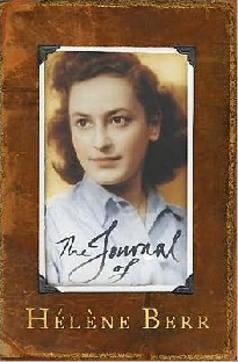
The Journal of Helene Berr by Helene Berr, published in French and in English in 2008

“Reading … [The Journal of Helene Berr] was not unlike reading Anne Frank’s diary: you feel you are in the presence of an author who would have become a major literary figure had she survived.” From an interview with Simon Mawer in the New York Times January, 2010.

Helene Berr, a resident of Paris, France was a member of a cultured well-off Jewish family that had lived in France for many generations. She was a gifted violinist as well as a gifted student at the Sorbonne where she made English literature her specialty. In her journal, which she kept from April of 1942 through February of 1944, she wrote with great excitement about the music she played and listened to. Music was a refuge and had the power to transport her away from the horrors of everyday life. Throughout the journal she uses quotes from the English Romantic poets Keats and Shelley to explain her state of mind or to amplify her opinions and anxieties about the on-going Occupation.

The Berrs felt themselves French citizens who happened to be Jewish. Raymond Berr, Helene’s father, was a prominent citizen, the director of a large chemical company, and a veteran of the French army. For the first few years of the war they went about living their lives as best they could; the stated targets of the Nazis were foreign-born Jews, many of whom had recently crossed the borders into France on the run from the Nazis.

The early part of the journal is taken up with Helene’s love life, the normal preoccupations of a 21 year-old. She’s in the process of dropping one boyfriend and becoming involved with another, but as the journal progresses, as her family and those around her became more directly threatened, her entries became more focused on  facts, rumors, observations, and anxieties about the war and the future. She even considered what she’d take with her if she were arrested: her violin and some books. She became well aware that she might not survive and that she was serving as a witness who was recording what was happening all around her.

June 1, 1942 was the date when the Nazis decreed that French Jews had to start wearing a yellow star affixed to their coats. After some hesitation, Helene decided she would wear it proudly. She describes in brilliant detail being out in public, looking directly into the eyes of people who stared at her. She had many non-Jewish friends and she writes about how most went out of their way to be supportive as did some strangers on the street who deliberately smiled at her. Most interestingly, she describes how wearing the yellow star changed her sense of self. For the first time in her life she felt like a foreigner. She also writes about how wearing it was exhausting.

Being from an established French family was not enough. Helene Berr records with horror when toward the end of June of 1942 her father was picked up and sent to Drancy where he was held for three months.  Less than a month after he was arrested, she records what she’s heard about the mass round-up of Jews who were sent to the Veledrome d’Hiver before they were transported to Drancy. Then on July 30, 1942 all of Helene’s co-workers in the office she worked at at the I.G.U.F, the Jewish governing body where Helene worked with young children, were arrested on a day she hadn’t been in the office.

When he father was released in September of 1942 they debated leaving Paris, but they never did. Little by little their circle of friends either escaped to France’s free zone, went into hiding, or stayed at home and, like them, lived one day at a time in great despair, waiting for the allies to make inroads and chase the Germans out. Helene wrote her last entry on February 15, 1944. Tragically, Helene and her parents were arrested and sent to Drancy on March 8, 1944. We learn about their arrest from a letter included in this volume that Helene wrote to her sister from Drancy on the morning they were arrested.

In addition to the memoir the English edition includes:
An introduction by the translator, David Bellos
Two maps: one of Helene Berr’s Paris and the second of The Latin Quarter in 1942
A letter from Helene Berr to her sister Denise written on the day she was arrested
An essay by Helene’s niece Mariette Job called “A Stolen Life”
An essay by David Bellos, called “France and the Jews”
A short bibliography for further reading
Family photos
Four indexes: Acronyms and Special Terms; Books Mentioned by Helene Berr; Street Names and Places; Personal Names


To learn more about the Drancy transit camp, click here.

People
Family
Berthe Rodrigues-Ely
    Antoinette Rodrigues-Ely – daughter of Berthe; married to Raymond Berr
        Jacqueline – daughter of Raymond and Antoinette
        Yvonne – daughter of Raymond and Antoinette; married to Daniel Schwartz
            Maxime and Yves Schwartz– sons of Yvonne and Daniel
        Denise – daughter of Raymond and Antoinette; married Francois Job
            Nadine, Didier, and Mariette Job – children of Denise and Francois
        Helene- daughter of Raymond and Antoinette; author
        Jacques – son of Raymond and Antoinette

Laure Nathan – cousin of Antoinette Berr
“Auntie” Germaine, “Uncle” Jules, and Nicole – exact relationships not clear
   
Friends and Acquaintances
Jean-Pierre Aron
Andre Baur – married to Odette; nephew of Julian Weill
Francoise Bernheim
Edouard Bloch
Jean Bloch
Lisette Bloch
Robert Dreyfus
Jacques Goetschel
Tamara Isserlis
Andre Kahn
Armand and Lea Katz
Emmanuel Lefschetz
Cecile Lehmann
Leon Lyon-Caen; brother-in-law of Pierre Masse
    Claude, Georges, and Gerard Lyon-Caen – sons of Leon
Jean Marx
Pierre and Francoise Masse
Charles Meyer
Denise Milhaud
Roger Nordmann – engaged to Francoise Blum
Therese Schwartz
    Danielle and Pierre Schwartz – children of Therese
Jacque Ulmann
Julien Weill
Maurice Weill-Raynal – married to Suzanne?
    Francois Weill-Raynal – son of Maurice; married to Edith
        Bernard
Jacque Weill- Reynal
Emmaline and Marianne Weill-Raynal – twin sisters

Places
Paris, France
Aubergenville, France
Pithiviers Transit Camp, France
Les Tourelles – Concentration Camp, France
Drancy Transit Camp, France
Velodrome d’Hiver
Hopital Rothschild